Finding a date that works for five people is the least musical part of being in a band, and it is usually done in the worst possible tool: a group chat where two people answer straight away, two answer a day later, and one never does. MyGigFlow gives rehearsals the same treatment as gigs, and puts a calendar underneath the question.
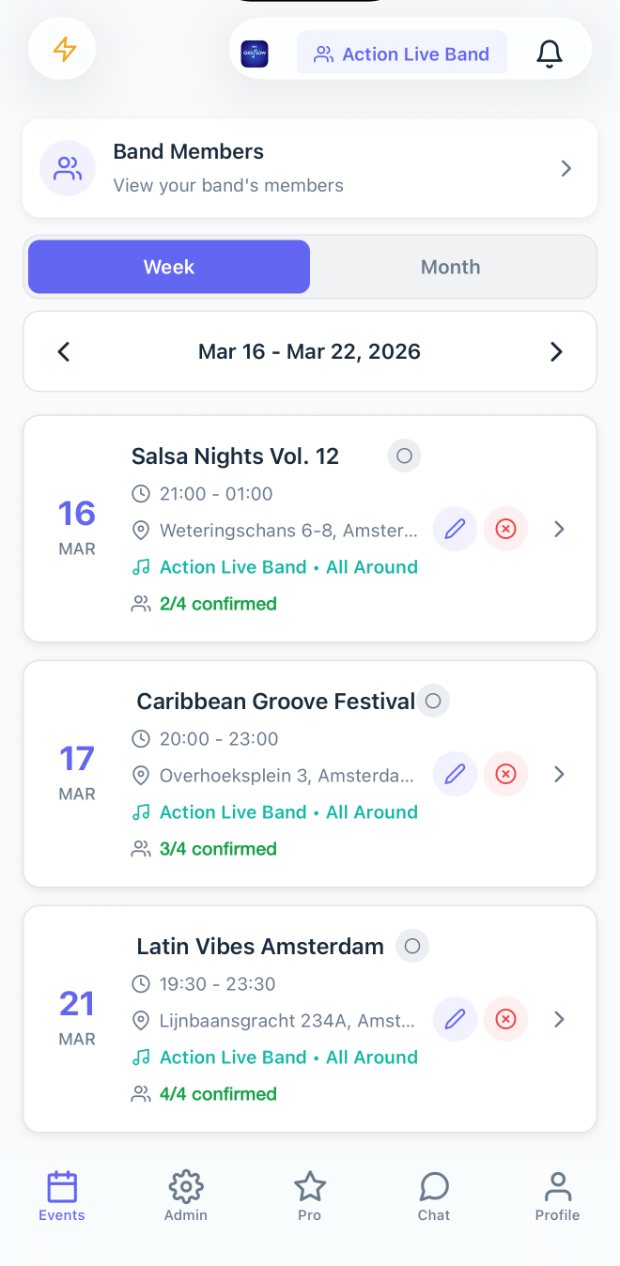
Events
Availability before the invitation
Members mark themselves per date as available, unavailable or unsure, with a short note if there is something to explain. That happens in advance, without anyone having to ask.
Picking a rehearsal date then becomes reading a calendar rather than starting a conversation. The answer is already there before the question is asked.
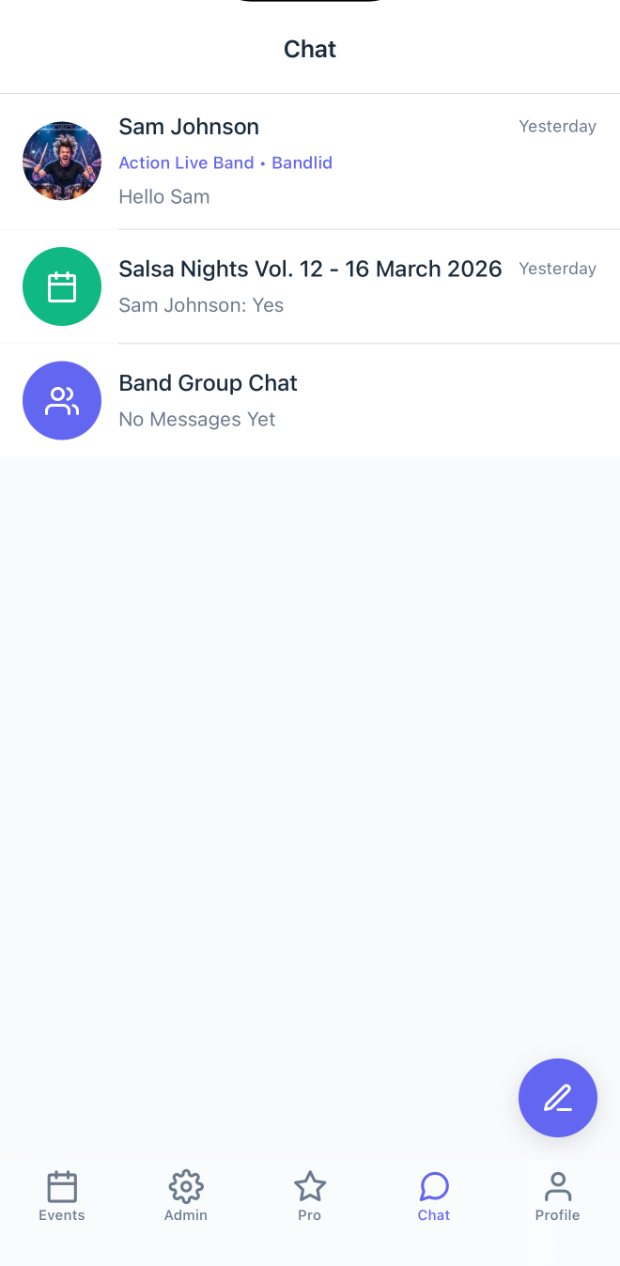
Chat
A rehearsal is not a lesser event
In a lot of tools a rehearsal is a calendar entry and nothing more. In MyGigFlow it carries what a gig carries.
Everyone invited answers yes, no or maybe, and the admin sees the count. Tasks can be assigned to a named person with notes and a date. Documents belong to the rehearsal. There is a chat for it, separate from the band-wide one. And it has its own income and expenses, so a rehearsal room that gets billed is not a number someone has to remember.
What a rehearsal carries
•Attendance per person, with a running count
•A timeline for the session
•Tasks on someone's name, with notes and a date
•Documents and equipment per rehearsal
•A chat for that rehearsal only
•Costs recorded where they happened
Everyone who plays, not only the regulars
Stand-ins and sound engineers attached to the band appear in rehearsal attendance too. A stand-in who is playing the gig on Saturday is exactly the person you want at Thursday's rehearsal, and leaving them off the list because they are not a permanent member is how a band ends up rehearsing without the person who has to play it.
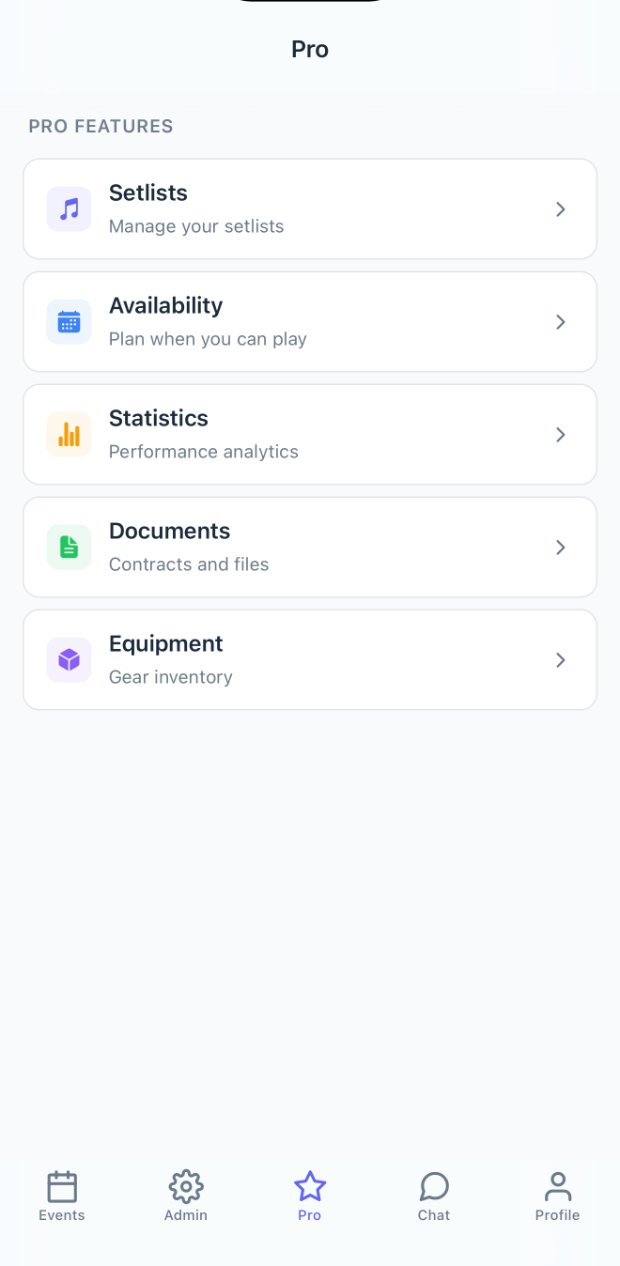
Pro
The repertoire behind the rehearsal
The band keeps its own song library: every song you can play, with the artist, the running time, the key, the tempo, a note, and a link to a recording if you want one. It sits at band level, so it is there before any particular rehearsal and still there afterwards.
That is the list you rehearse from, and the list a setlist is built out of.
Setlists that know how long they are
A setlist is assembled from the repertoire, and the app adds up the running time as you build it. You know whether you are at forty minutes or an hour before you commit to it, rather than finding out on stage.
One setlist can be attached to several gigs and to rehearsals at the same time. That matters more than it sounds: the set you play three weekends running is one list, and rehearsing it means opening the same list the gig will use.
A run sheet for the rehearsal, and the sheet music behind it
A rehearsal with three hours and eleven songs benefits from a plan as much as a gig does. Rehearsals carry the same run sheet: what you are doing at what time, and who is bringing what.
The music itself hangs off the repertoire. A song can carry its sheet music as a document, so the parts are attached to the song rather than sitting in someone's email. Whoever needs to read it opens the song.
•A run sheet per rehearsal
•Tasks on a name, ticked off by that person
•Sheet music attached to a song in the repertoire
Rehearsals go into your calendar too
The personal calendar link covers rehearsals as well as gigs, in the same feed. A rehearsal without a set time becomes an all-day entry, so it shows up on the right day without pretending to know an hour nobody set.
That matters more for rehearsals than for gigs. A gig you remember. A Tuesday rehearsal three weeks out is exactly the thing that gets double-booked.
Frequently asked questions
How do I find a date everyone can make?+
Members set their availability per date - available, unavailable or unsure, with an optional note - in advance. You read the calendar instead of asking, and pick the date that works.
Do rehearsals have attendance like gigs do?+
Yes. Everyone invited answers yes, no or maybe and the admin sees the totals, the same as for an event.
Can freelancers and sound engineers be included in a rehearsal?+
Yes. Stand-ins and sound engineers attached to the band appear in rehearsal attendance, not only the permanent line-up.
Can I keep costs for a rehearsal room?+
Yes. Rehearsals carry their own income and expenses, so the rehearsal room lands in the same place as everything else the band spends.
What is the difference between the repertoire and a setlist?+
The repertoire is everything the band can play, kept at band level with key, tempo and running time. A setlist is a selection from it for a specific occasion, and the app totals the running time as you build it.
Can one setlist be used for more than one date?+
Yes. A setlist can be attached to several events and to rehearsals at the same time, which is what happens when you play the same set on consecutive weekends.
Do rehearsals show up in my own calendar?+
Yes, in the same feed as your gigs. One personal link that Google Calendar, Apple Calendar and Outlook can subscribe to. A rehearsal without a set time becomes an all-day entry on the right day.
Where does the sheet music for a song live?+
With the song in the repertoire. A document can be attached to a repertoire song, so the parts sit with the music instead of in a chat thread or an old email.